The Black Cowgirl of Agua Dulce (The Fault Line)
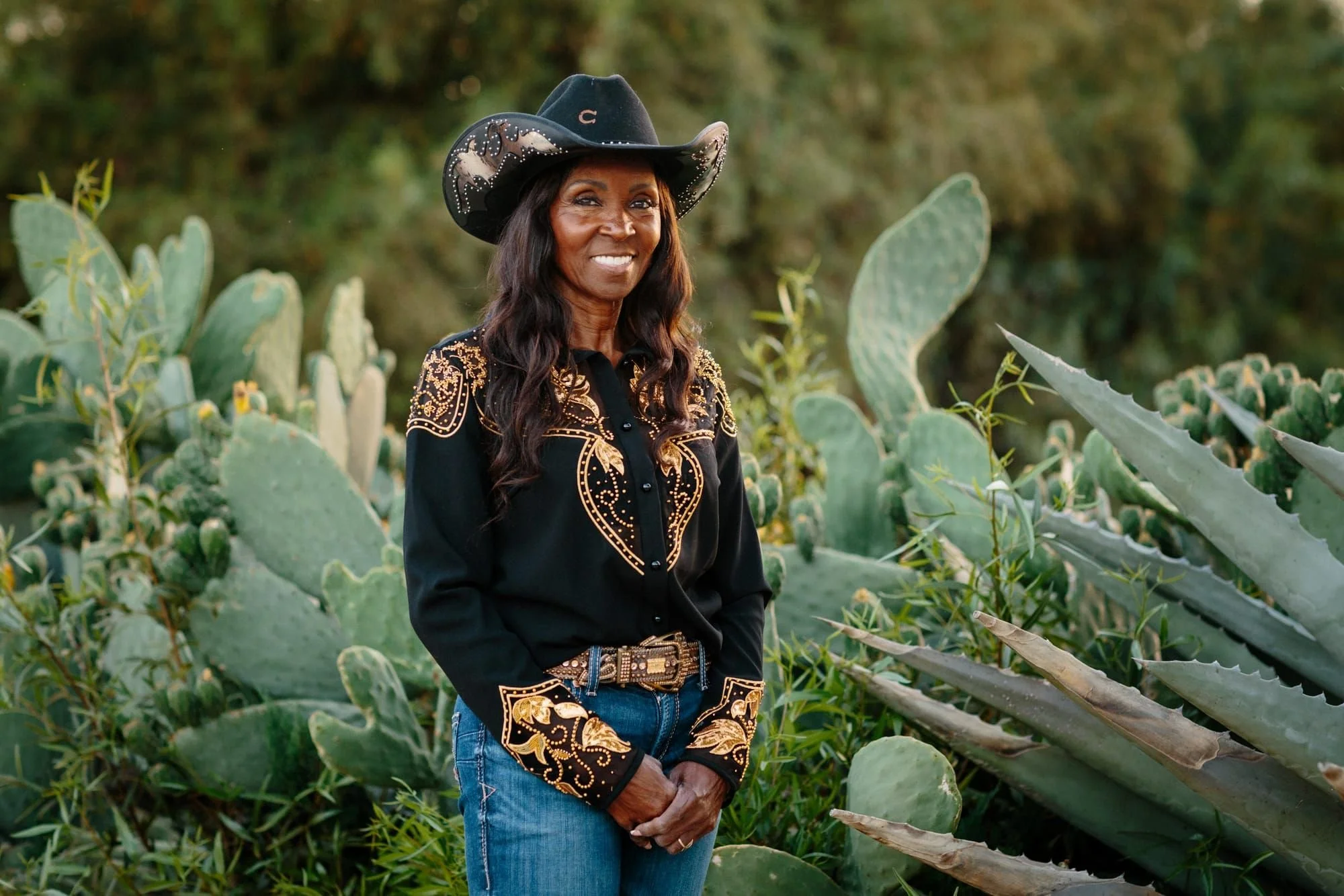
Rodeo pioneer DeBoraha Townson stands in her backyard in Agua Dulce, California, on June 9, 2026. Photo by Stella Kalinina for The Fault Line.
She made rodeo history three decades ago. Now, from her California ranch, DeBoraha Townson is passing down a legacy of land, horses and resilience — even as she competes with two torn shoulders.
By Nadra Nittle, June 19, 2026
AGUA DULCE, Calif. — “Slow him down. Don’t let him go that fast.”
On a Tuesday afternoon in early June, DeBoraha Townson called out these commands to a petite tween, one of a handful of students barrel racing in a grass ring on her ranch in Agua Dulce, California. Townson speaks like she walks — slowly and deliberately — qualities that convinced her young charge to heed her immediately.
As the middle schooler eased her Quarter Horse to a halt, goats bleated from a nearby pen. The earthy smell of hay pierced the warm air — swirling with dust kicked up by horse hooves and cowboy boots. Beyond the barrel ring lay a field of wild mustard and a vineyard. With sunset approaching, the Sierra Pelona Mountains loomed as hulking, shadowy figures in the distance.
This rural scene could have unfolded in any number of regions, but it took place in Southern California, just 45 miles from the serpentine freeways and steel high rises of Los Angeles.
Townson has owned this ranch for three decades. In 1990, she became the first Black woman to compete at a professional rodeo finals. In 2022, the National Multicultural Western Heritage Museum in Fort Worth, Texas, inducted her into its Hall of Fame. Today, at 68, she still competes — despite serious injuries and the deaths of her husband and brother just months apart over the past year. Many of her students, who call her “Miss DeBoraha” (pronounced “Da-bore-uh”), weren’t even born when she made history.
Through it all, she’s continued running her 3-acre ranch. She starts at dawn, mucking stalls, hooking up trailers and tending to her 12 horses. Over the past decade, as pop culture has embraced Western aesthetics through artists like Lil Nas X, Tanner Adell and Beyoncé, Townson stands out as an actual cowgirl. For her, the identity isn't a look but a way of life, one she's passing down to students from a range of ethnic backgrounds — white, Black, Latine.
Read the full story at the The Fault Line.